Building the Trust Infrastructure of the Carbon Economy
Why ISO/IEC 17025 is the Mandate for Investment-Grade Carbon Removal
1.0 Introduction: The Data-Driven Foundation
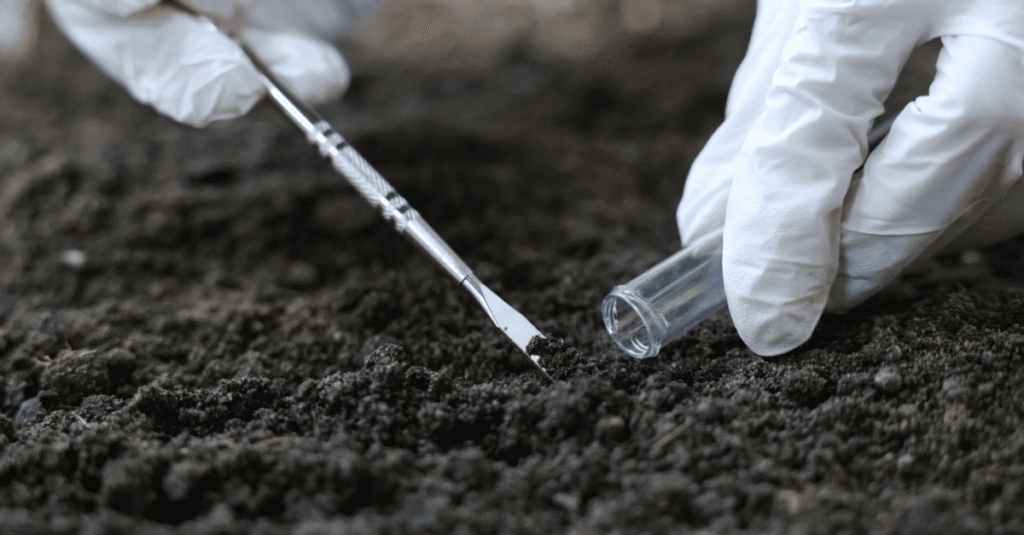
In the carbon removal market, the real product being traded isn’t the biochar or CO2 itself—it’s the data that proves carbon was actually removed. For investors and credit buyers, that data is the difference between a bankable asset and a liability. If the data underpinning a credit is questionable, the asset becomes toxic.
As we transition from a voluntary marketplace of pilot projects to a regulated global economy, the industry must shift from a “trust me” approach to a “prove it” mandate. To build a financially sustainable Carbon Dioxide Removal (CDR) market, we must move beyond scientific theory to a system of verifiable execution. ISO/IEC 17025—the international standard for testing and calibration laboratories—provides the technical rigor and legal defensibility required to transform raw data into a bankable asset.
2.0 The Recipe vs. The Chef: Operationalizing S668
Establishing a scientific standard is a crucial first step, but it is incomplete without a robust enforcement layer.
2.1 The Historical Gap: Why Standards Lagged
For the biochar industry, ANSI/ASABE/USBI S668 is the essential “scientific recipe,” detailing the correct methods for measurement and testing. This standard is a vital evolution, moving the industry away from ill-suited coal or wood-fuel protocols that were long used as proxies.
Historically, the development of biochar-specific standards has been slow, leaving the market largely unregulated during its formative years. In this “Wild West” environment, the lack of tailored testing protocols created vulnerabilities that bad actors could exploit. Without standardized oversight, it was possible for producers to sell inferior products or manipulate data to capitalize on the booming interest in carbon credits. This regulatory lag meant that the market often could not distinguish between high-quality carbon removal and low-grade material, allowing “phantom credits” to circulate and undermining trust in the asset class.
2.2 The Role of Enforcement
However, owning a cookbook doesn’t make you a Michelin-star chef. Merely possessing the S668 standard does not ensure a laboratory has the competence to produce reliable results.
ISO/IEC 17025 fills this gap. It acts as the “global enforcement mechanism,” subjecting laboratories to independent assessment to prove they can execute the recipe with accuracy and impartiality.
3.0 Three Pillars of Investment-Grade Data
ISO/IEC 17025 isn’t just a badge; it is a comprehensive management system that mitigates the primary risks associated with carbon measurement. It enforces competence in three critical areas:
3.1 Method Validation: The Biochar Reality Check
Biochar is difficult to test. Its porous structure absorbs airborne moisture rapidly, which can skew weight-based calculations. An unprepared lab might misinterpret absorbed water as part of the carbon material, inflating the results.
Accreditation forces a laboratory to perform Method Validation. This isn’t a theoretical exercise. The lab must provide objective, statistical evidence that it can distinguish between “moisture” and “volatile matter” using real-world samples in their specific facility.
3.2 Metrological Traceability: Guaranteeing the “Tonne”
The financial architecture of the carbon market rests on the “tonne,” yet this unit is at risk if equipment is not properly managed.
- The Risk: If a lab’s balance is miscalibrated (e.g., reading “1.0000g” when the weight is actually “0.9900g”), the project generates “phantom credits”.
- The Solution: The standard mandates Metrological Traceability. Equipment must have an unbroken chain of custody back to the International System of Units (SI) via institutes like NIST.
This ensures that a “tonne” in the US is physically and financially identical to a “tonne” in Paris.
3.3 Impartiality: Eliminating Conflicts of Interest
In a nascent market, the risk of data manipulation is real. Producers might test their own biochar or use affiliated labs to “cherry-pick” results that inflate a project’s value.
ISO/IEC 17025 is unique in that it explicitly audits Impartiality. Accredited labs must proactively identify and eliminate risks to objectivity—such as financial ties between lab personnel and clients. This structural independence transforms data from a simple measurement into an “investment-grade” certificate of fact.
4.0 The Economic Imperative: Why Quality Pays
High-quality data is a primary driver of financial performance for project developers. Using an accredited lab directly impacts the bottom line by minimizing “Uncertainty Discounts” applied by registries.
Consider the following scenario where a lab measures a biochar batch at 80% carbon content:
- Non-Accredited Lab Outcome: The lab has unknown or high uncertainty (e.g., 10%). To protect credit integrity, the registry applies the “Conservative Principle” and credits the project for the lower bound: 70%.
- Accredited Lab Outcome: The lab proves low uncertainty (e.g., 1%). The registry confidently credits the project for 79%.
The Result: The developer generates and sells 9% more credits for the exact same physical product, simply by choosing a lab that can prove its accuracy. Over thousands of tonnes, this revenue far outweighs the cost of testing.
5.0 Unlocking a Global, Digital Marketplace
ISO/IEC 17025 is foundational for the future of digital Monitoring, Reporting, and Verification (dMRV) and international trade.
- The “Digital Passport”: Registries like Puro.earth and Verra are moving toward Application Programming Interface (API)-based systems. An accreditation number acts as a machine-readable “trust signal,” allowing platforms to automatically validate data and filter out unverified inputs.
- Global Liquidity: Through the ILAC Mutual Recognition Arrangement (MRA), an accreditation granted in the U.S. is recognized globally. This ensures a “Tested Once, Accepted Everywhere” standard, removing trade barriers for developers selling credits internationally.
6.0 A Call to Action
For the CDR marketplace to mature, stakeholders must formalize the role of this standard. We must build on a bedrock of empirical truth rather than estimation.
Actionable Mandates
Project Developers
Demand Specificity. Mandate that contract labs hold ISO/IEC 17025 accreditation specifically for S668 methods. Verify that biochar testing is explicitly listed in their Scope of Accreditation.
Investors
De-risk Your Portfolio. Integrate accreditation checks into due diligence. If a portfolio company uses a lab not accredited for Biochar/Soil Carbon, the asset risk profile is significantly higher.
Registries
Automate Trust. Update dMRV and API protocols to require the Accreditation Body Symbol or accreditation number as a mandatory field, automating quality control at the point of entry.


Have some questions?
Not sure where to start?
Let's start a conversation. We're here to help you navigate
the bioeconomy with confidence.