Low Carbon Marine Fuels: Options, Costs, and the Future of Shipping
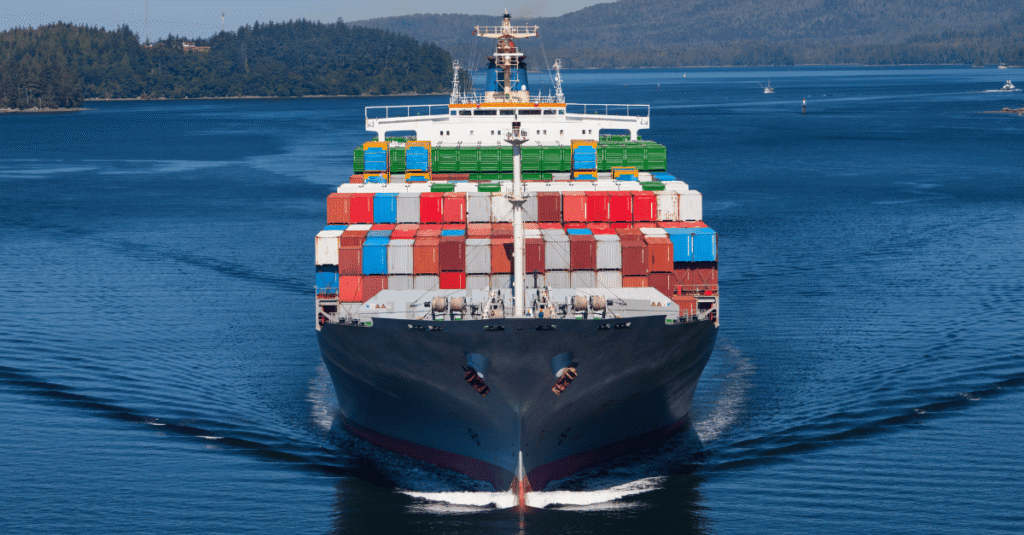
The push toward low carbon marine fuels is no longer a distant conversation. For shipowners, operators, and investors, it is quickly becoming an operational decision.
Regulators are tightening emissions rules. Cargo owners are asking harder questions about supply chain emissions. Capital providers are increasingly evaluating shipping assets through a carbon lens. All three forces are pushing the industry in the same direction.
The physics of the transition are straightforward. Meaningful emissions reductions usually require fuels that are more complex to handle and more expensive than conventional bunkers.
The real challenge is not identifying possible fuels. It is deciding when to move, which fuels to prioritize, and how to avoid locking vessels into the wrong technology.
Between now and 2030, most companies are not betting on a single winner. They are managing a portfolio of fuel options while watching policy, supply chains, and technology maturity evolve.
That makes the next several years less about finding a perfect solution and more about managing flexibility while the market sorts itself out.
In This Article
The Policy and Market Forces Driving Low Carbon Marine Fuels
The strongest immediate regulatory driver is FuelEU Maritime, part of the EU Fit for 55 framework. The initial carbon intensity reduction requirement that began in 2025 set a relatively modest bar, but the pace increases as the decade moves forward. That matters because operators are not planning for the 2025 hurdle alone. They are preparing for what comes next.
At the same time, the pressure is not just regulatory. Cargo owners want cleaner supply chains. Lenders and investors are watching emissions exposure more closely. In shipping, that combination has a way of moving strategy meetings from theoretical to urgent.
For many companies, this is still a pre-investment period. They are building operational experience, testing procurement strategies, and positioning themselves for tighter carbon rules ahead. That is a rational move in a market where supply is limited and costs still need explaining in the boardroom.
Why Shipping Is Taking a Portfolio Approach
For the rest of this decade, most owners and operators are not choosing one fuel and calling it a day. They are managing a portfolio.
That usually means using drop-in or blended fuels where logistics and economics work, ordering dual-fuel or fuel-flexible newbuilds, and watching regional policy and carbon pricing closely enough to know when a pilot fuel becomes a serious procurement option.
A few patterns keep showing up across the market. The molecules that deliver real emissions reductions are in short supply. Policy support in road transport and aviation often pulls those molecules away from marine. And the early cost of carbon abatement can be high enough to make even motivated buyers wince.
So the practical question is not which fuel wins in the abstract. It is how to preserve optionality while the market matures.
Near-Term Options for Low Carbon Marine Fuels
Biodiesel (FAME)
Biodiesel remains one of the most accessible near-term tools for marine decarbonization. Produced from fats, oils, and greases, it is already widely used in road transport and increasingly tested in marine applications.
Its appeal is easy to understand. It can deliver meaningful lifecycle carbon reductions, especially when waste-based feedstocks are involved, and there is already established production capacity in many markets.
Still, biodiesel is not a frictionless answer. Storage and blending add operational complexity, and feedstock competition is getting tighter. Renewable diesel and sustainable aviation fuel are often bidding for the same waste oil streams, usually with stronger policy support behind them.
LEC Partners has worked with maritime operators evaluating similar pathways through a market analysis of low carbon marine fuels that examined supply availability, pricing, and operational implications across multiple regions.
Renewable Diesel (HVO)
If operators could choose purely on ease of use, renewable diesel would get a lot of votes. It is chemically very similar to fossil diesel and works as a true drop-in fuel. No new tanks. No special blending steps. No awkward workarounds.
That is the good news. The less pleasant part is the price.
Strong demand from road and aviation markets, both supported by clear policy incentives, keeps HVO priced at a premium. Much of the announced capacity is effectively spoken for before marine buyers even enter the conversation.
From a shipping perspective, renewable diesel is technically attractive and commercially constrained. It is a premium option, not yet a mass-market marine solution.
Methanol
Methanol has become one of the more visible next-wave fuels in shipping, especially for newbuilds. It is liquid at ambient conditions, it fits more comfortably into existing fuel logistics than some alternatives, and it has already attracted serious attention from early adopters.
There is, however, a big difference between fossil methanol and renewable methanol. Fossil methanol is already widely available as a chemical feedstock. Renewable methanol, including bio- and e-methanol, is still a much smaller market with a growing but tightly watched project pipeline.
The trade-off is straightforward. Methanol is practical to handle, but it carries a volumetric energy penalty. Ships need much more tank space for the same range compared with marine gasoil.
Even so, methanol is shaping vessel decisions now. Many owners see it as a credible transition pathway where fossil and renewable molecules can be blended over time as supply improves and costs come down.
LNG and Bio-LNG
LNG is already an established marine fuel with growing bunkering infrastructure in key ports. It offers lower sulfur oxides, particulate matter, and nitrogen oxides than conventional fuels, along with meaningful carbon reductions when paired with newer low-slip engines.
The reason LNG still holds strategic interest is not just LNG itself but the possibility of increasing the share of bio-LNG over time.
Bio-LNG can deliver substantially lower lifecycle carbon intensity depending on feedstocks and supply chains. Similar dynamics appear across other renewable gas markets where renewable natural gas project evaluations often focus on feedstock availability, regulatory incentives, and long-term supply economics.
Future Fuels Already Shaping Investment Decisions
Green Hydrogen
Green hydrogen remains central to many long-term decarbonization scenarios, but its role in shipping this decade is likely to be more indirect than direct.
As a bunker fuel, hydrogen faces serious challenges. Its volumetric energy density is very low, storage requirements are demanding, and port-side logistics are not yet mature at the scale deep-sea shipping would require.
In practical terms, hydrogen matters more near term as a feedstock story. It underpins fuels like e-methanol, ammonia, and synthetic diesel, all of which may become more relevant to shipping as the decade progresses.
Green Ammonia
Ammonia continues to attract attention because it combines carbon-free potential at the point of use with an existing global production and logistics footprint tied to fertilizer and chemicals.
That said, nobody should pretend it is plug-and-play. Toxicity is a serious issue. Safety management will matter enormously. Combustion can also create nitrogen oxide emissions that need to be controlled.
Green ammonia is promising, but wider marine adoption still depends on proven engines, stronger supply, standardized safety frameworks, and more acceptable economics. It looks more like a next-decade fuel than a mainstream answer for the next couple of years.
Advanced Bio-Oils
Advanced bio-oils produced through pyrolysis or hydrothermal liquefaction are often part of future fuel conversations for good reason. They can be made from residues and waste streams and upgraded into energy-dense liquids with appealing long-term potential.
Today, though, most of these pathways remain at pilot or early commercial scale. Upgrading requirements and hydrogen demand continue to weigh on project economics.
They are worth watching. They are just not likely to solve near-term marine fuel procurement.
The Economics Behind the Fuel Shift
The market side of this transition is where enthusiasm usually meets a spreadsheet. Three themes matter most.
First, marine is often competing for low carbon molecules rather than leading demand for them. Road transport, aviation, and some industrial sectors still benefit from clearer incentives and stronger credit structures.
Second, early abatement costs are high. For fuels like biodiesel blends, bio-LNG, and renewable methanol, the implied cost per tonne of carbon dioxide avoided can land in the mid-hundreds of dollars depending on the region and pathway.
This is why many shipping companies and investors rely on independent low carbon fuel project due diligence to evaluate technology readiness, supply chain risks, and long-term project economics before making large capital commitments.
Signals to Watch Through 2028
- Shipping-specific regulation and carbon pricing: Implementation details under IMO measures, EU ETS, and FuelEU Maritime will shape when low carbon fuels become core procurement choices rather than selective trials.
- Final investment decisions on supply projects: Announced renewable methanol, ammonia, bio-LNG, and advanced biofuel projects need to move from press releases to actual volumes.
- Performance from early adopters: Real operational data from methanol-, LNG-, and eventually ammonia-fueled vessels will separate the credible pathways from the fashionable ones.
- Stability of incentive values: Credit prices and incentive structures can change fuel economics quickly, sometimes faster than operators would prefer.
How We Frame the Problem at LEC Partners
At LEC Partners, we see low carbon marine fuels as a question of sequencing, optionality, and discipline.
For many owners, operators, investors, and counterparties, the most practical questions are not especially glamorous. Where can credible emissions reductions be achieved per dollar today? How should vessels, contracts, and infrastructure be designed to preserve flexibility? Which producer, port, and offtake relationships actually improve access to scarce low carbon supply?
Those questions tend to lead to better decisions than broad declarations about a single winning fuel.
Our work across fuel markets, project development, technical diligence, and regulatory strategy reflects the same lesson over and over again. The companies that navigate transition periods well usually do not chase certainty where none exists. They build informed options, test assumptions early, and stay flexible enough to move when the market becomes clearer.
That is likely to be true in marine fuels too.
Speak with an Expert
The market for low carbon marine fuels is moving, but it is not moving in a straight line. If you are evaluating fuel strategy, vessel flexibility, project investment, or market access, we can help you sort through the technical and commercial trade-offs with a practical lens.
Further Reading
Insights from LEC Partners
Market Analysis of Low Carbon Marine Fuels
A case study on how LEC Partners helped a global cruise operator evaluate near-, medium-, and long-term marine fuel options.
Evaluation of Sustainable Aviation Fuel Production
A related view into how fuel markets, feedstocks, and project economics shape low-carbon fuel investment decisions.
Trusted Industry Resources
International Maritime Organization
Global maritime regulatory guidance and decarbonization developments affecting shipping strategy.
International Energy Agency
Energy market analysis and decarbonization insights relevant to shipping, fuels, and infrastructure.
European Commission Transport
Policy details on FuelEU Maritime and related transport decarbonization measures in Europe.
Written by the LEC Editorial Team
Explore more insights


Have some questions?
Not sure where to start?
Let's start a conversation. We're here to help you navigate
the bioeconomy with confidence.