Circular Distillery Models: Turning Spent Grains into Long-Term Value
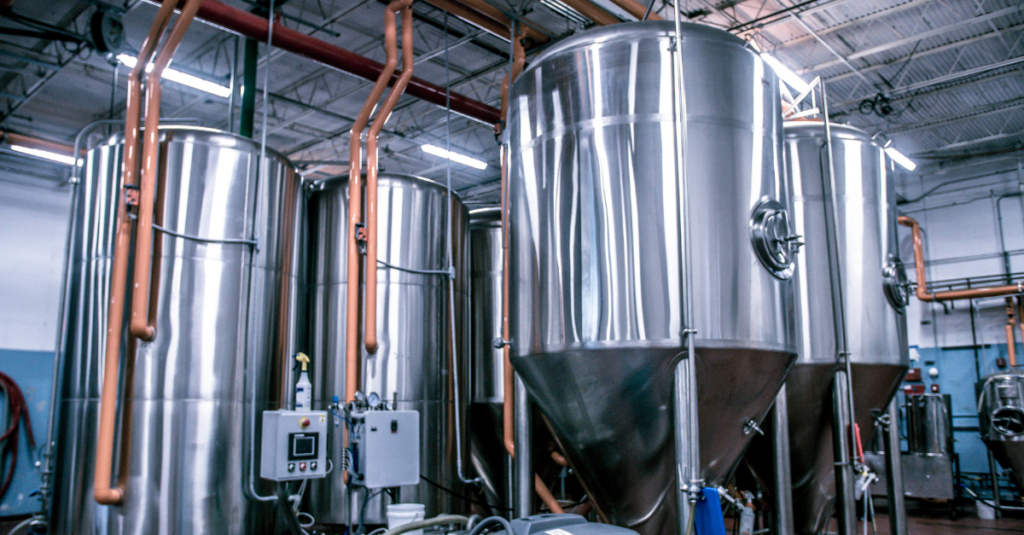
If you operate a distillery, you don’t so much have a “spent grains problem” as a recurring opportunity that is often undervalued or poorly modeled. Spent distillers’ grains (SDG) show up every day as a function of normal operations. The strategic question is whether they remain a low-value co-product—or become a foundational element of a circular distillery model that improves margins while reducing emissions.
LEC Partners recently supported an industry-led sustainability initiative that evaluated how SDG, fermentation CO₂, and other side streams can be converted into durable value at both facility and portfolio scale. The resulting circular distillery model centers on three commercially grounded pathways: biobased adhesives, renewable natural gas (RNG) with protein recovery, and CO₂-to-alcohol.
Why Circular Distillery Models Matter Now
In practice, circularity in distillery operations goes beyond finding someone to take the grain. It’s about redesigning carbon, energy, and materials flows so side streams stay in productive use and support long-term business performance.
In this work, the team screened candidate pathways through two lenses at the same time:
- Sustainability performance — greenhouse gas (GHG) reductions, carbon intensity, and permanence of impact
- Financial durability — revenue potential, margin, scalability, and regulatory feasibility across multiple assets
Effective circular distillery models align three outcomes simultaneously: yield optimization, decarbonization, and economic returns.
From Spent Grains to Biobased Adhesives
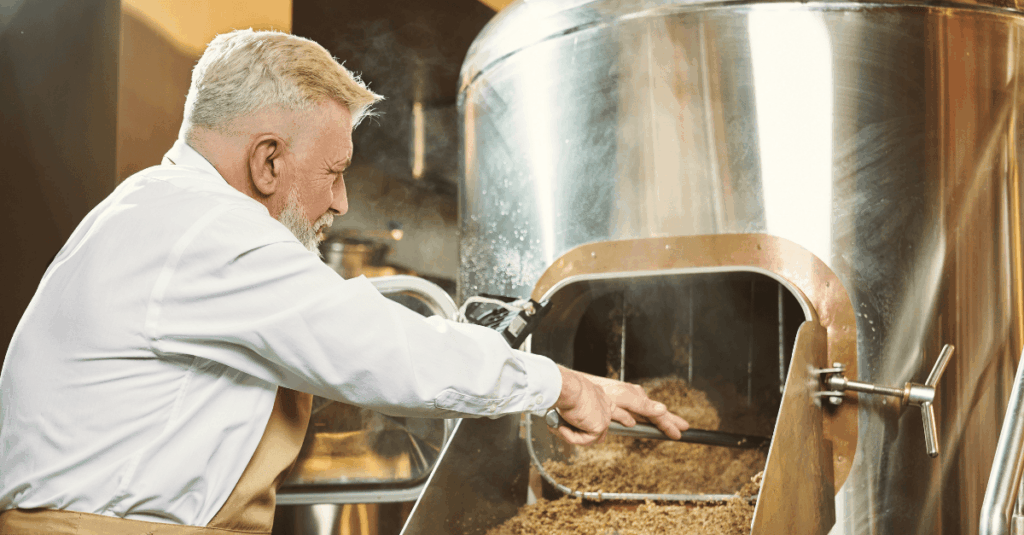
Spent distillers’ grains exiting a production process—an everyday byproduct that can support circular distillery value creation.
Early analysis considered nanocellulose production from SDG, but deliberately deprioritized that pathway. While technically feasible, the cellulose fraction of SDG represents a relatively small portion of the total material, leaving the majority of the feedstock still requiring disposition.
By contrast, the biobased adhesives pathway can utilize essentially the full SDG stream—proteins, oils, fibrous material, and naturally occurring nanoparticles formed during brewing and distillation.
Independent laboratory and application testing showed that SDG-derived adhesives can:
- Partially substitute incumbent phenol-formaldehyde and pMDI wood adhesives
- Improve both dry and wet shear strength at substitution levels near 15%
- Achieve high wood-failure percentages, indicating the bond can exceed the strength of the wood itself
Commercially, this maps to established, high-volume markets including:
- Building materials: plywood, OSB, particleboard, flooring, glulams, cabinets
- Packaging: corrugated shipcases and other fiber-based packaging
- Retail adhesives: fast-moving consumer packaged goods (FMCPG)
Across scenarios evaluated, SDG-based adhesives consistently showed strong direct revenue potential per ton of spent grains. For many operators, adhesives can serve as a practical economic anchor within a circular distillery strategy.
Renewable Natural Gas and Protein: Decarbonizing Operations
For decarbonization, thermal pressure hydrolysis (TPH) followed by anaerobic digestion emerged as a compelling pathway to convert SDG into RNG. TPH pre-treatment can significantly improve gas yields while avoiding energy-intensive drying steps that appear in conventional approaches.
In representative distillery scenarios, the analysis showed that:
- SDG can be converted into RNG and a protein-rich co-product
- TPH systems can be scaled to process additional local waste feedstocks
- Supplemental materials—such as waste cardboard, manure, and agricultural residues—can move facilities beyond net-zero toward carbon-negative operation
At the facility level, that typically translates into a permanent SDG management solution, reduced exposure to fossil natural gas markets, and an RNG offtake aligned with U.S. policy and incentive structures.
Closing the Loop with CO₂-to-Alcohol
Fermentation CO₂ is typically treated as an unavoidable emission. In this analysis, it was evaluated as a recoverable feedstock.
Using a commercially validated CO₂-to-ethanol process, scenarios were modeled in which fermentation CO₂ is captured and converted back into alcohol. For a representative distillery, this translated into several million additional case equivalents of production capacity without changing upstream fermentation or distillation.
Regulatory review found that existing U.S. Alcohol and Tobacco Tax and Trade Bureau (TTB) frameworks allow CO₂-derived ethanol to be used in neutral spirits and blended products, including whiskey and blended whiskey.
The Integrated Biorefinery: A Practical Circular Distillery Model
When combined—adhesives, RNG, and CO₂-to-alcohol—these pathways form an integrated biorefinery approach designed to overlay onto existing distillery operations:
- SDG is allocated between adhesives and RNG production
- Protein is recovered and sold into existing markets or local value chains
- Fermentation CO₂ is recycled into alcohol production
- Additional waste feedstocks can be integrated to deepen decarbonization outcomes
Modeled results demonstrated strong financial performance alongside a carbon-negative GHG balance at scale. Importantly, this model focuses on proven unit operations and commercial platforms rather than requiring distilleries to fundamentally change how spirits are made.
How LEC Partners Supports Circular Distillery and Bioeconomy Projects
Cambridge, MA-based LEC Partners supports clients across the bioeconomy with feasibility-first evaluation and implementation support. Our work connects feedstock realities, technology readiness, regulatory pathways, and financial performance before capital is committed.
For distilleries, producer groups, and investors, this commonly includes technology screening, techno-economic analysis, lifecycle assessment support, and project development from concept through deployment.
Common Questions
What does “circularity” mean in a distillery context?
Circularity means designing operations so side streams like spent grains and fermentation CO₂ remain in productive use—supporting emissions reductions and creating durable value rather than relying on disposal or low-value outlets.
Which SDG pathway is most attractive financially?
In the evaluated scenarios, biobased adhesives demonstrated strong direct revenue potential per ton of spent grains. The best pathway still depends on site constraints, offtake realities, and investment objectives.
Which pathway provides the biggest decarbonization impact?
RNG production (particularly with effective pre-treatment) can materially reduce a facility’s dependence on fossil natural gas. Integrating supplemental local waste feedstocks can further improve carbon outcomes.
Can these solutions be implemented without disrupting operations?
Yes—when designed correctly. These strategies are typically implemented as “overlay” systems that take side streams already exiting the process, minimizing changes to core production.
Is CO₂-to-alcohol viable from a regulatory standpoint?
Regulatory review found pathways where CO₂-derived ethanol can be used in neutral spirits and blended products under existing U.S. frameworks. Project-specific compliance planning is still essential.
Talk With an Expert
LEC Partners brings together more than 150 bioeconomy specialists to help clients reduce risk and move projects forward with confidence. Whether you need technology assessment, due diligence, or support from planning through startup, we can help.
Further Reading
LEC Insights
Domestic Next-Gen Feedstocks: Revolutionizing the Bioeconomy (Part 1)
How emerging feedstocks are reshaping bioeconomy project strategy, risk, and scalability.
Biomass Feedstocks To Help Derisk Biofuels Projects
Practical considerations for feedstock quality, logistics, and contracting to reduce project risk.
Bioeconomy Analytics Framework: Accelerating Decarbonization to Deliver on Net Zero Objectives
A structured approach to evaluating decarbonization pathways using comparable financial and impact metrics.
Other Trusted Industry Sources
Characterization of Spent Grain from Irish Whiskey Distilleries for Biorefinery Feedstock Potential
A technical assessment of spent grain composition and its suitability as a biorefinery feedstock.
Distillers Have a Problem: What To Do with All That Spent Grain?
An overview of common spent grain handling challenges and practical outlet options.

Have some questions?
Not sure where to start?
Let's start a conversation. We're here to help you navigate
the bioeconomy with confidence.